


What is floatation therapy? A complete guide
What is floatation therapy? A complete guide
The quiet rise of floatation therapy
The first time you lie back in a float pool, your brain isn’t quite sure what to do. There’s water beneath you, but you’re not sinking. Nothing presses on your spine, your shoulders aren’t holding anything up, your hips stop pulling. Your body is held by salt, and the absence of effort feels almost suspicious. After a few minutes the suspicion fades. After ten, the chatter in your head starts to thin out. By the time the session ends, an hour has passed in what felt like twenty minutes.
That’s floatation therapy. It’s having a quiet moment in the wellness world, and it’s earned. Chronic stress in the UK is at record levels. Sleep is fraying for huge numbers of people. The practices that genuinely move the needle on the nervous system are getting more attention, and float therapy is one of the few that holds up to scrutiny.
This guide covers what floatation therapy actually is, how it works on the body, what the evidence says, what to expect on your first session, and why the format you choose matters more than people realise.
What is floatation therapy?
Floatation therapy, sometimes called float therapy or REST (Restricted Environmental Stimulation Therapy), is the practice of lying in shallow water saturated with Epsom salt, in a quiet, dark, temperature-controlled room. The salt makes the water dense enough that your body floats effortlessly at the surface. The water sits at skin temperature, so the boundary between your body and the water disappears. Light and sound are removed. What’s left is a sustained pause from almost every external input your nervous system has to process.
The technique was developed in 1954 by John C. Lilly, an American neuroscientist who wanted to understand what the brain does when external stimuli are stripped away. His early tanks were upright and involved breathing apparatus, which was about as relaxing as it sounds. The modern version, with the participant lying flat in shallow Epsom-salted water, emerged in the 1970s and has been refined since. The past decade has seen a renewed research push, particularly from the Laureate Institute for Brain Research in Oklahoma, which has produced a substantial body of work on float therapy’s effects on anxiety and the nervous system.
How floatation therapy works
The mechanics are simple, even if the experience isn’t.
Around 500kg of Epsom salt (magnesium sulphate) is dissolved into roughly 25cm of water. That density, far above the salinity of the Dead Sea, is what allows the body to float without effort. The water is heated to skin temperature, around 35°C, which means thermoreceptors stop firing because they have nothing to report. There’s no temperature gradient between your skin and the water, no awareness of where one ends and the other begins.
The room is lightless and largely silent. Some people leave a soft glow on for the first session; most settle into full darkness once they’re comfortable. Earplugs keep water out and ambient sound to a minimum.
What you’re left with is the absence of input. Gravity, normally compressing your spine and pulling on every joint, is effectively switched off. Touch fades because the water is the same temperature as you are. Sight and sound are gone. The brain, which spends most of its waking hours filtering and prioritising sensory input, suddenly has very little to do.
That’s where the interesting stuff happens.
The science: what floatation does to your nervous system
The dominant story of modern life is sympathetic nervous system overdrive. Cortisol stays elevated. The breath stays shallow. Most of us live with the gas pedal lightly pressed at all times.
Float therapy is one of the more reliable ways to flip the autonomic nervous system into its parasympathetic state — the “rest and digest” mode where heart rate slows, digestion picks up, and the body starts the maintenance work it can’t do under stress. Studies from the Laureate Institute have shown measurable drops in cortisol, blood pressure, and heart rate during and after a float session. The same studies show reduced activity in the brain regions associated with anxiety and self-referential thought.
EEG research has shown that float sessions tend to produce a shift towards theta brainwaves, the state usually associated with deep meditation and the moments just before sleep. People who have meditated for years often report reaching states in a single float that took them months to access through practice alone.
Magnesium absorption through the skin is more contested. The marketing tends to oversell it; the dermatology research suggests transdermal absorption is real but modest. The bigger drivers of the post-float effect are nervous system down-regulation and the genuine physical relief of an hour without gravity.
The benefits of floatation therapy, backed by research
Float therapy isn’t a miracle. It is, however, one of the better-evidenced practices in the recovery and stress space. Here’s where the research currently sits.
Stress and anxiety
This is where the strongest data exists. A 2018 study published in PLOS ONE showed that a single one-hour float session significantly reduced anxiety in people with anxiety and stress-related disorders, with effects holding for at least 24 hours. Subsequent work has shown the effect is replicable and dose-dependent. More sessions, more benefit.
Sleep
People consistently report better sleep on float nights, and several studies have shown improvements in sleep quality and reductions in time-to-sleep among regular floaters. The combination of a cortisol drop, magnesium exposure and parasympathetic activation seems to set the body up well for the night that follows.
Muscle recovery
Athletes have used float therapy for decades. Zero-gravity decompression plus magnesium-rich water reduces post-exercise muscle soreness, accelerates lactic acid clearance, and gives the spine an hour of complete unloading. Some elite sports teams have used floatation as part of their recovery protocols.
Chronic pain
Research from Sweden’s Karlstad University has shown reductions in chronic pain — particularly low back pain, fibromyalgia and tension headaches — after regular float sessions. The mechanism is partly physical (decompression, muscle release) and partly central (changes in pain perception via the nervous system).
ADHD and overstimulation
Anecdotal but increasingly common. People with ADHD often describe float as one of the few environments where their nervous system finally settles. The lack of input gives the over-stimulated brain a place to land. Formal research is still limited; the lived experience is widespread enough to take seriously.
What to expect on your first float
Most people are nervous on their first session. That’s normal. Here’s what actually happens.
You’ll arrive about ten minutes early. There’s a brief intro, a chance to ask questions, a tour of the float room. Each session is private. Your room, your shower, your float. No shared space.
Before the float, you shower thoroughly. This isn’t optional — body lotions, perfumes and oils have to come off before you get in the water. Earplugs go in. Some people prefer a small glow of light in the room for their first session. Some go straight to full darkness. There’s no right answer, and you can adjust mid-float.
Getting in is straightforward. The water is warm. You lie back, the salt takes over, and the support arrives almost instantly. Most people spend the first ten minutes finding a comfortable head and arm position. Arms above your head, arms by your sides, hands on your stomach. There’s no rule, just whatever stops you fidgeting.
The first ten to fifteen minutes are usually the busiest. The mind processes the strangeness, the breath finds a rhythm, small itches and adjustments happen. Then something shifts. The mental noise thins. Time stops behaving normally. You might drift in and out of something that feels close to sleep, except clearer. People often describe the latter half of a session as either deeply restful or strangely alert. Sometimes both at once.
When the session ends, soft music starts up to bring you back, and the lights gradually rise. You’ll shower again to get the salt off. Most people are quiet for the next hour or two. There’s a post-float settledness that’s hard to describe and hard to forget.
Open pool floats versus enclosed pods, and why the format matters
Most float centres in the UK use pods — enclosed capsules with a lid that opens and closes. They work fine. But for a meaningful slice of the population, the enclosed format is the single biggest barrier to ever trying floatation in the first place. Claustrophobia is a real reason people never book.
Open pool floats are different. Instead of a capsule, the float room itself is the float. A private space with a shallow pool you walk into, a high ceiling above you, no enclosure at all. You can sit up. You can stretch your arms out wide. You can move freely, see the room around you when the lights are on, and never feel boxed in.
Two groups especially benefit. Anyone with even a hint of claustrophobia, which is a lot more people than admit it, finds the open format genuinely accessible. Anyone tall enough to feel the walls of a pod (above about 6’1″) gets to actually move.
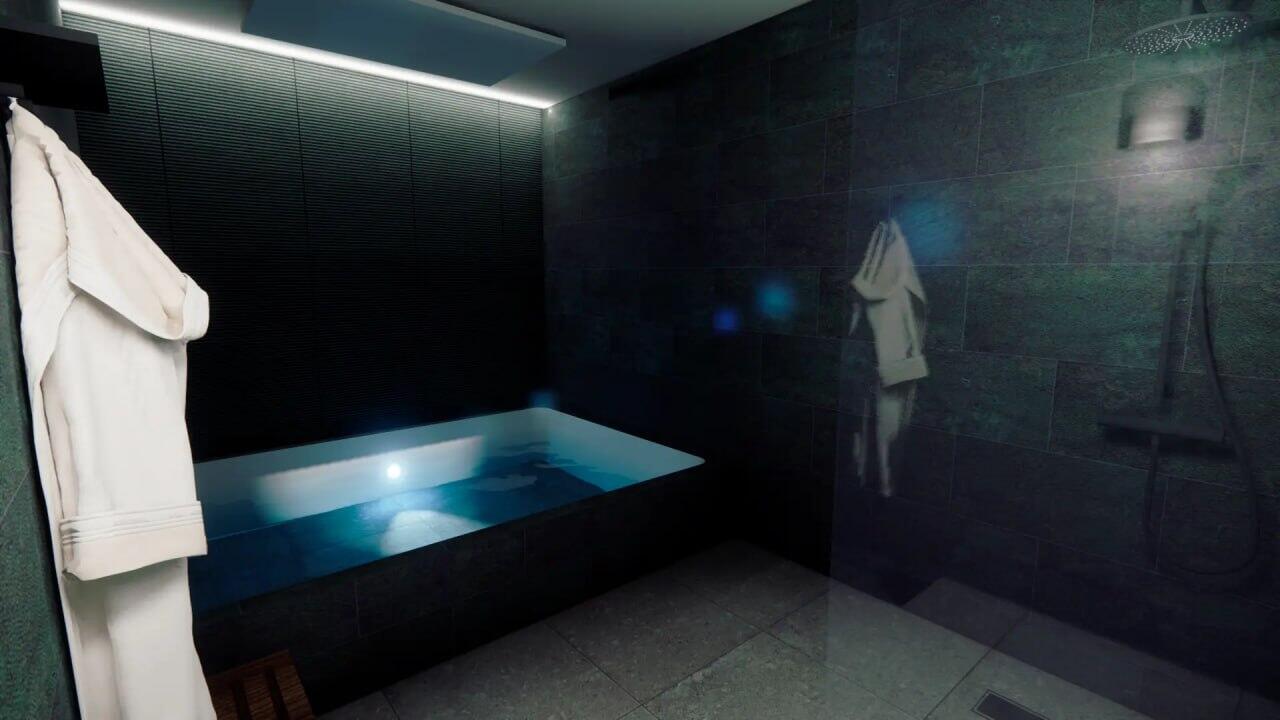
Our float room at being is an open pool, not a pod. It’s the format we chose deliberately, because it removes the most common barrier to first-time floating without compromising any of the therapeutic benefit. The salt density, water temperature, lightless silence — all the same. Just without the lid.
Who shouldn’t float
Floatation is safe for most people, but there are exceptions worth knowing about.
- Epilepsy. Sensory deprivation can be a trigger; people with epilepsy should consult their doctor before floating.
- Infectious or open skin conditions. Anything contagious or that would be aggravated by salt water should wait until cleared.
- Recent tattoos. Tattoos need at least four to six weeks to heal before exposure to Epsom salt water.
- First trimester of pregnancy. First-trimester clients are asked to wait or get GP approval. Float can be excellent in the second and third trimesters with appropriate guidance.
- Severe kidney problems. Magnesium sulphate exposure should be discussed with a doctor first.
- Acute ear infections. Earplugs help, but an active infection is worth resolving first.
Hair colour, recent hair treatments and contact lenses are also worth flagging in advance. We’ll give you specific guidance for each.
How often to float for best results
The research suggests that for stress and anxiety, fortnightly sessions over an eight to twelve week period produce the most consistent benefit. For acute recovery (after a hard training block, a high-stress work period, or as a sleep reset), single sessions still work, just with shorter-lasting effects.
Most regular floaters settle into a rhythm of one session every two to four weeks. People going through a particularly stressful patch sometimes float weekly for a month or two and then dial back. The second float is better than the first, and the fifth is better still. Consistency compounds.
A different way to spend an hour
There aren’t many things you can do in modern life that genuinely subtract input rather than add to it. Most “rest” is still loud. Float therapy is one of the few practices that actually gives the nervous system a chance to come down off the throttle.
If you’ve been thinking about trying it, the easiest way is to come in and do it. Book a float at being — our open pool format makes first-time floats genuinely accessible, even if you’ve held off because of pods. Sessions are 60 minutes, private, and held in a room designed around the experience rather than fitted around it.
FAQs
How long is a float session?
A standard float session is 60 minutes in the water, plus around 30 minutes either side for showering and settling. Plan for around 90 minutes in total.
Will I get bored?
Most people don’t. The first ten to fifteen minutes are usually the busiest mentally, and after that the experience tends to settle. Time often feels shorter than it is. Sixty minutes can pass in what feels like twenty.
Do I need to swim?
No. The salt density makes it impossible to sink. You can’t go under unless you actively try, and even then the salt buoys you back up. Non-swimmers float just as comfortably as swimmers.
What do I wear?
The float room is fully private, with your own shower, so the choice is yours. Most guests float without swimwear because anything you wear can press into the skin under buoyancy and become uncomfortable.
Will I fall asleep?
Some people do, particularly in their first few sessions. It’s safe. The salt density keeps your face out of the water even if you drift off. Most people settle into a state that’s neither fully asleep nor fully awake, but deeply rested.
Is it claustrophobic?
In a pod, sometimes, though many people who think they’ll feel enclosed actually don’t. In an open pool format like the one at being, the question doesn’t really come up. The room is full-size, the ceiling is high, and there’s no lid.
How quickly will I feel a benefit?
Most people feel something after one session, usually a calm that lasts a day or two. The cumulative benefits — improved sleep, lower baseline stress, better stress recovery — tend to show up after three to five sessions over a few weeks.